


[Dec 08, 2025] Latest Questions AZ-400 Guide to Prepare Free Practice Tests
Reliable AZ-400 Dumps Questions Available as Web-Based Practice Test Engine
NEW QUESTION # 161
You need to use Azure Automation Sure Configuration to manage the ongoing consistency of virtual machine configurations.
Which five actions should you perform in sequence? To answer, move the appropriate actions from the list of actions to the answer area and arrange them in the correct order.
NOTE: More than one order of answer choices in correct. You writ receive credit for any of the orders you select.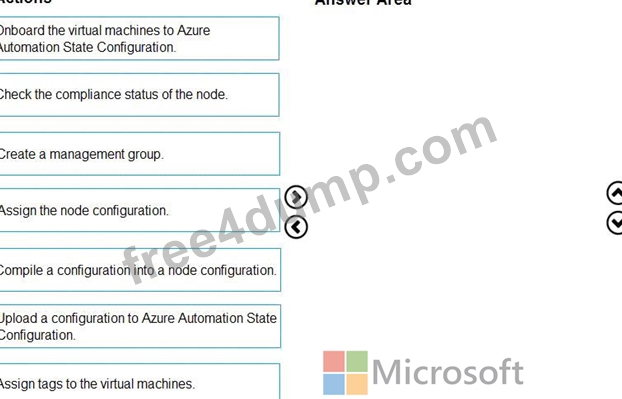
Answer:
Explanation: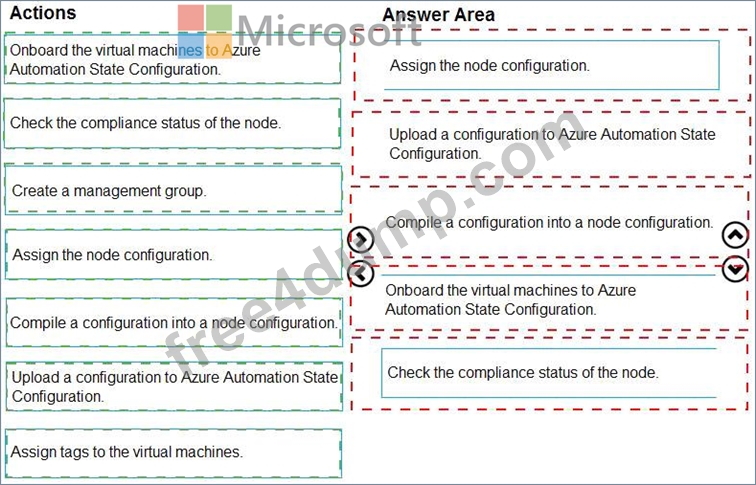
Explanation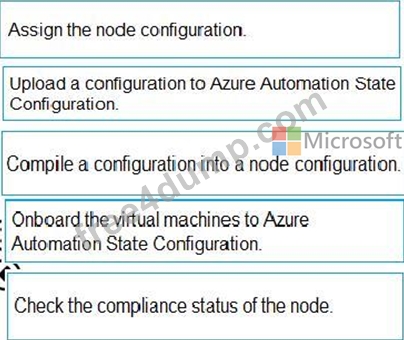
Step 1: Assign the node configuration.
You create a simple DSC configuration that ensures either the presence or absence of the Web-Server Windows Feature (IIS), depending on how you assign nodes.
Step 2: Upload a configuration to Azure Automation State Configuration.
You import the configuration into the Automation account.
Step 3: Compiling a configuration into a node configuration
Compiling a configuration in Azure Automation
Before you can apply a desired state to a node, a DSC configuration defining that state must be compiled into one or more node configurations (MOF document), and placed on the Automation DSC Pull Server.
Step 4: Onboard the virtual machines to Azure State Configuration
Onboarding an Azure VM for management with Azure Automation State Configuration Step 5: Check the compliance status of the node.
Viewing reports for managed nodes. Each time Azure Automation State Configuration performs a consistency check on a managed node, the node sends a status report back to the pull server. You can view these reports on the page for that node.
On the blade for an individual report, you can see the following status information for the corresponding consistency check:
The report status - whether the node is "Compliant", the configuration "Failed", or the node is "Not Compliant" (when the node is in ApplyandMonitor mode and the machine is not in the desired state).
References: https://docs.microsoft.com/en-us/azure/automation/automation-dsc-getting-started
NEW QUESTION # 162
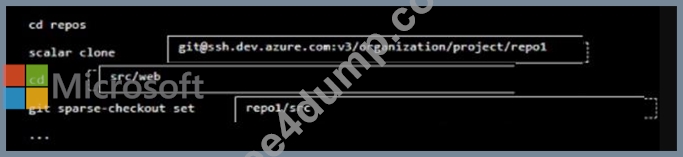
You have an Azure Repos repository named repo1.
You need to clone repo1. The solution must clone only a directory named src/web.
How should you complete the script? To answer, drag the appropriate values to the correct targets,Each value may be used once, more than once, or not at all. You may need to drag the spirt bar between panes or scroll to view content.
NOTE: Each correct selection is worth one point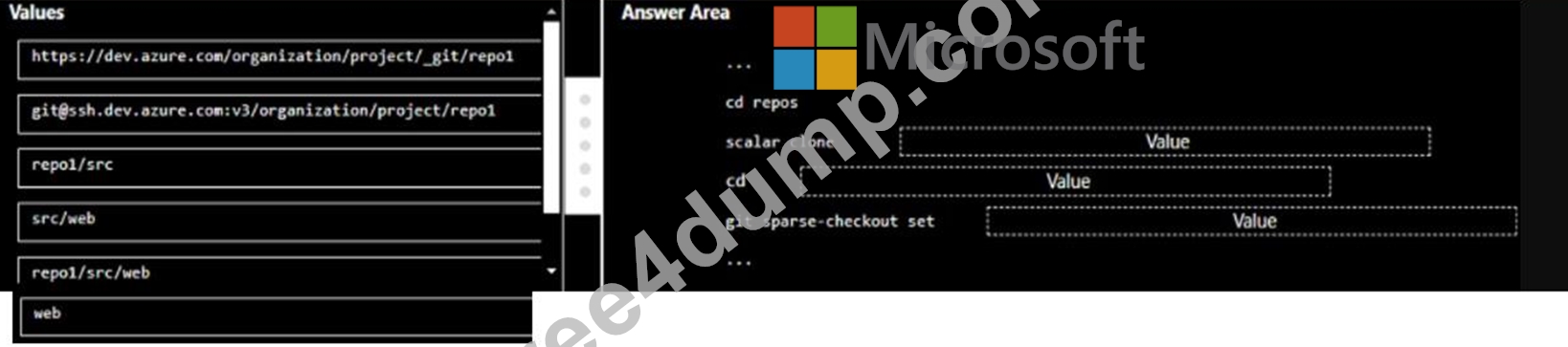
Answer:
Explanation: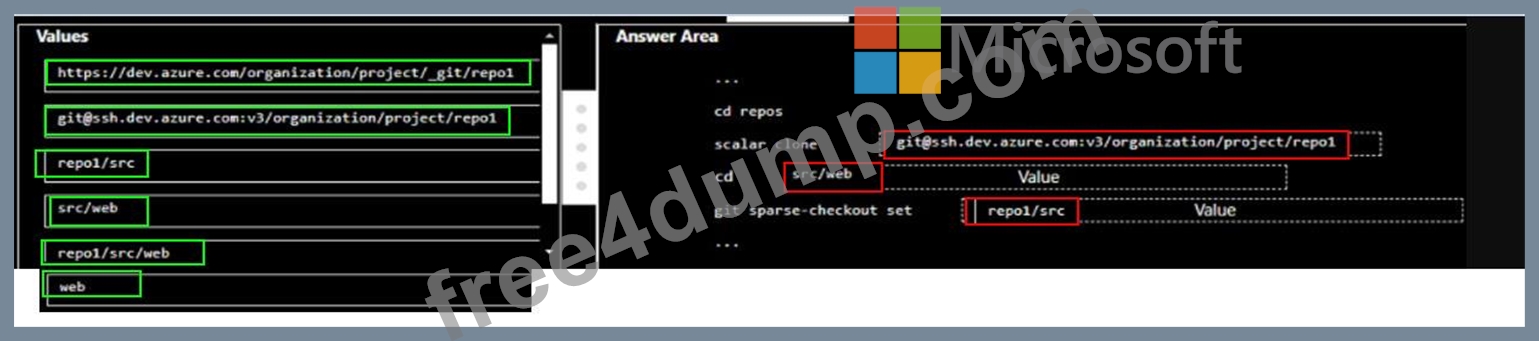
NEW QUESTION # 163
You need to configure Azure Automation for the computer in Group7.
Which three actions should you perform in sequence? To answer, move the appropriate actions from the list of actions to the answer area and arrange them in the correct order.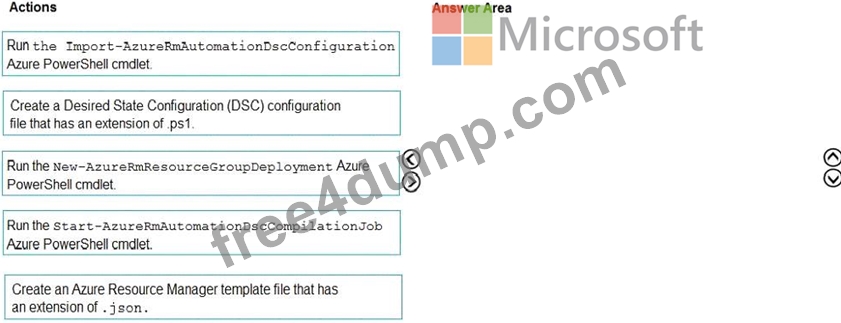
Answer:
Explanation: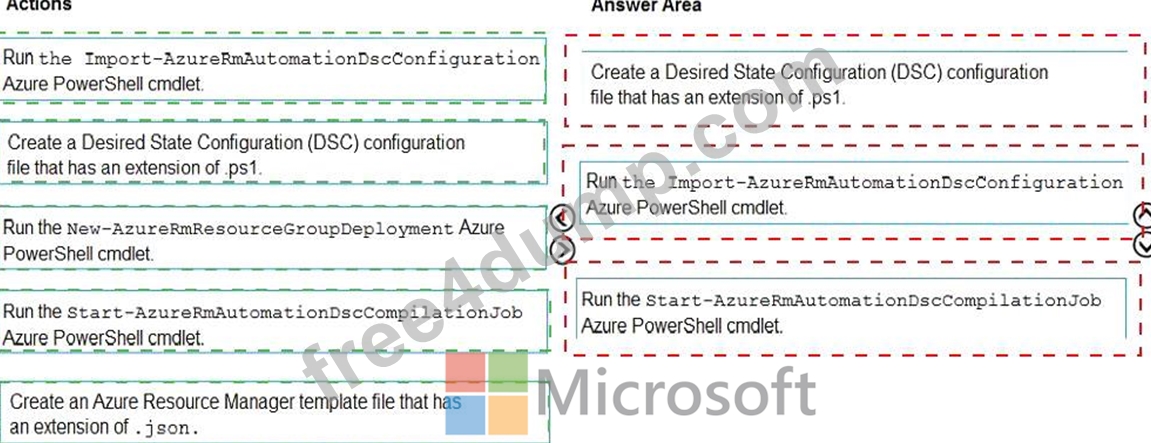
Explanation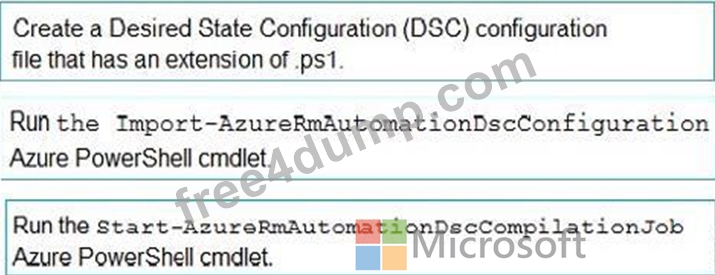
Step 1: Create a Desired State Configuration (DSC) configuration file that has an extension of .ps1.
Step 2: Run the Import-AzureRmAutomationDscConfiguration Azure Powershell cmdlet The Import-AzureRmAutomationDscConfiguration cmdlet imports an APS Desired State Configuration (DSC) configuration into Azure Automation. Specify the path of an APS script that contains a single DSC configuration.
Example:
PS C:\>Import-AzureRmAutomationDscConfiguration -AutomationAccountName
"Contoso17"-ResourceGroupName "ResourceGroup01" -SourcePath "C:\DSC\client.ps1" -Force This command imports the DSC configuration in the file named client.ps1 into the Automation account named Contoso17. The command specifies the Force parameter. If there is an existing DSC configuration, this command replaces it.
Step 3: Run the Start-AzureRmAutomationDscCompilationJob Azure Powershell cmdlet The Start-AzureRmAutomationDscCompilationJob cmdlet compiles an APS Desired State Configuration (DSC) configuration in Azure Automation.
References:
https://docs.microsoft.com/en-us/powershell/module/azurerm.automation/import-azurermautomationdscconfigur
https://docs.microsoft.com/en-us/powershell/module/azurerm.automation/start-azurermautomationdsccompilatio
NEW QUESTION # 164
You are deploying a new application that uses Azure virtual machines.
You plan to use the Desired State Configuration (DSC) extension on the virtual machines.
You need to ensure that the virtual machines always have the same Windows features installed.
Which three actions should you perform in sequence? To answer, move the appropriate actions from the list of actions to the answer area and arrange them in the correct order.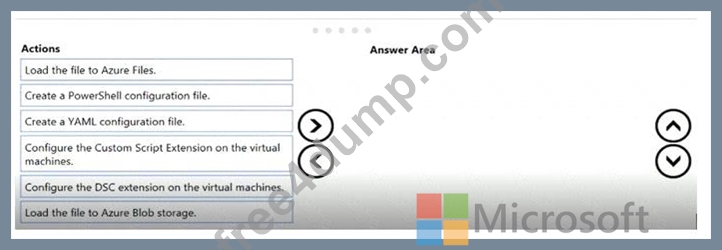
Answer:
Explanation: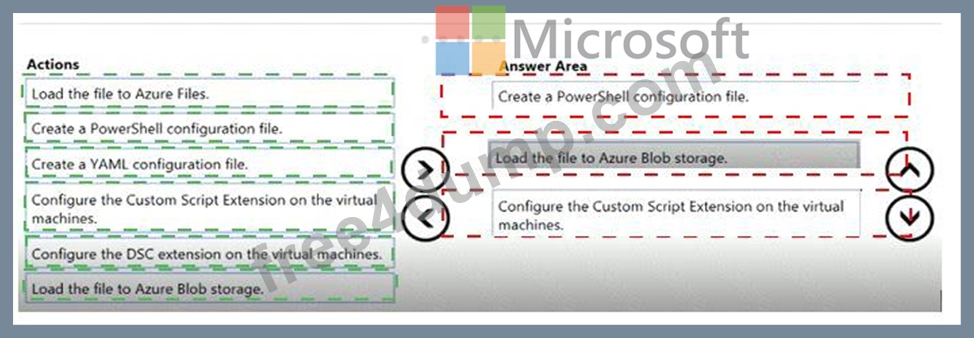
Explanation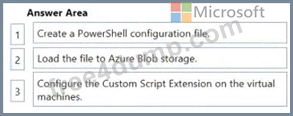
Step 1: Create a PowerShell configuration file
You create a simple PowerShell DSC configuration file.
Step 2: Load the file to Azure Blob storage
Package and publish the module to a publically accessible blob container URL Step 3: Configure the Custom Script Extension on the virtual machines.
The Custom Script Extension downloads and executes scripts on Azure virtual machines.
Reference:
https://docs.microsoft.com/en-us/azure/automation/automation-dsc-getting-started
https://docs.microsoft.com/en-us/azure/virtual-machines/extensions/custom-script-windows
NEW QUESTION # 165
You company uses Azure DevOps to deploy infrastructures to Azure.
Pipelines are developed by using YAML.
You execute a pipeline and receive the results in the web portal for Azure Pipelines as shown in the following exhibit.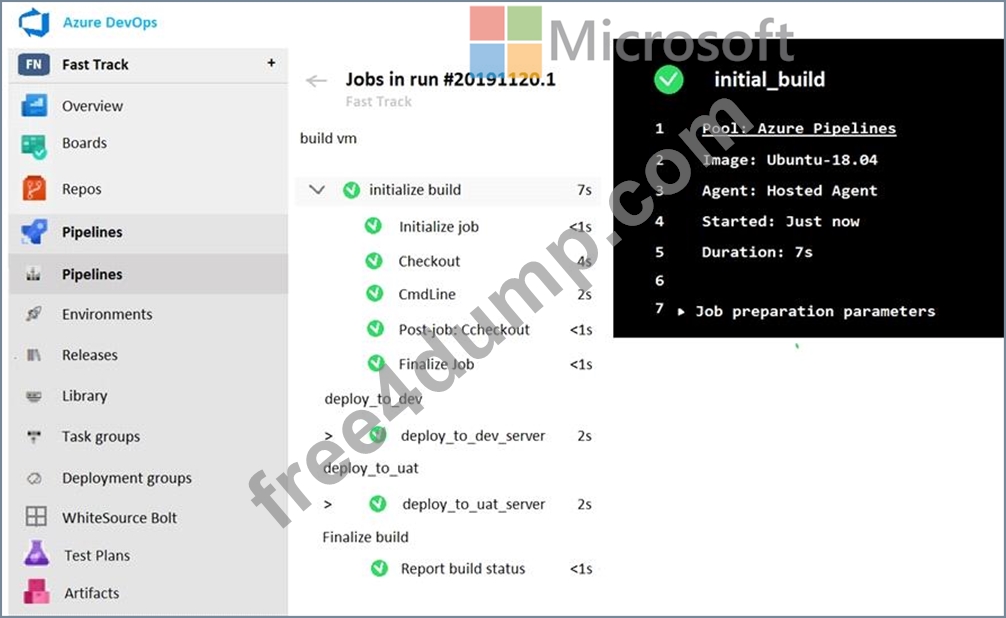
Use the drop-down menus to select the answer choice that completes each statement based on the information presented in the graphic.
NOTE: Each correct selection is worth one point.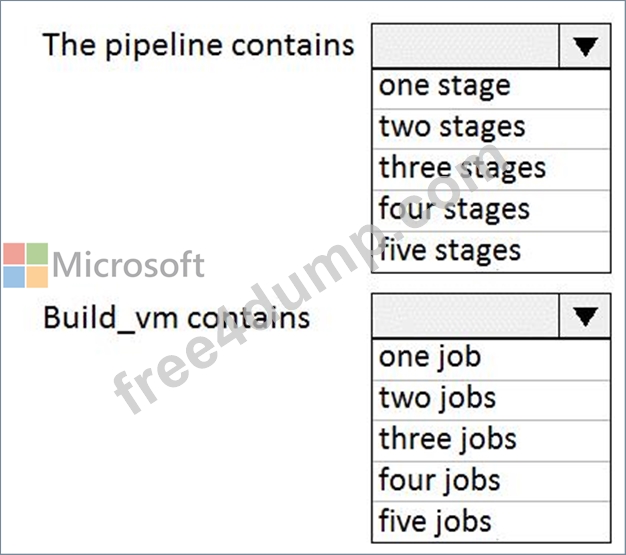
Answer:
Explanation: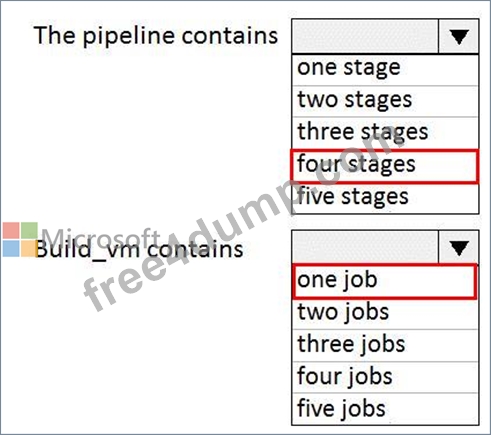
Reference:
https://dev.to/rajikaimal/azure-devops-ci-cd-yaml-pipeline-4glj
NEW QUESTION # 166
How should you confrere the release retention policy for the investment planning depletions suite? To answer, select the appropriate options in the answer area.
NOTE: Each correct selection is worth one point.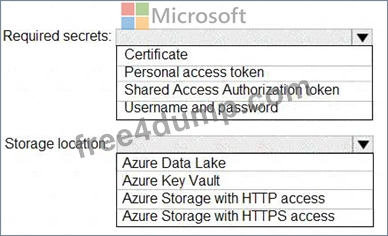
Answer:
Explanation: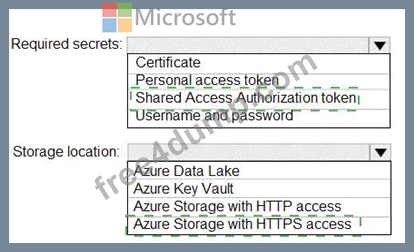
Explanation: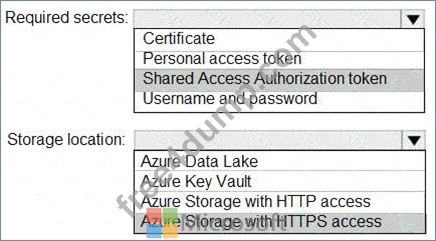
Every request made against a storage service must be authorized, unless the request is for a blob or container resource that has been made available for public or signed access. One option for authorizing a request is by using Shared Key.
Scenario: The mobile applications must be able to call the share pricing service of the existing retirement fund management system. Until the system is upgraded, the service will only support basic authentication over HTTPS.
The investment planning applications suite will include one multi-tier web application and two iOS mobile application. One mobile application will be used by employees; the other will be used by customers.
References: https://docs.microsoft.com/en-us/rest/api/storageservices/authorize-with-shared-key
NEW QUESTION # 167
You have a web app hosted on Azure App Service. The web app stores data in an Azure SQL database.
You need to generate an alert when there are 10,000 simultaneous connections to the database. The solution must minimize development effort.
Which option should you select in the Diagnostics settings of the database?
- A. Stream to an event hub
- B. Archive to a storage account
- C. Send to Log Analytics
Answer: C
Explanation:
ENABLE DIAGNOSTICS TO LOG ANALYTICS
This configuration is done PER DATABASE
1. Click on Diagnostics Settings and then Turn On Diagnostics
Graphical user interface, text Description automatically generated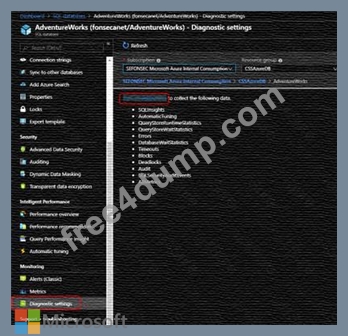
2. Select to Send to Log Analytics and select the Log Analytics workspace. For this sample I will selected only Errors Graphical user interface Description automatically generated with medium confidence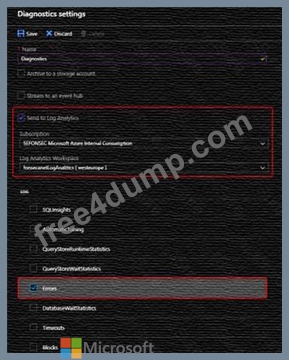
Reference:
https://techcommunity.microsoft.com/t5/azure-database-support-blog/azure-sql-db-and-log-analytics-better-toget
NEW QUESTION # 168
Your company uses Git as a source code control system for a complex app named App1.
You plan to add a new functionality to App1.
You need to design a branching model for the new functionality.
Which branch lifetime and branch time should you use in the branching model? To answer, select the appropriate options in the answer area.
NOTE: Each correct selection is worth one point.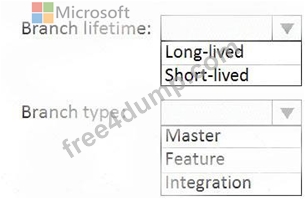
Answer:
Explanation: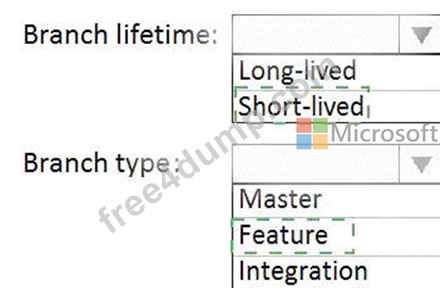
Explanation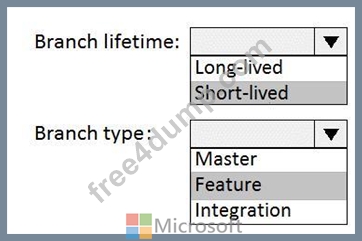
Branch lifetime: Short-lived
Branch type: Feature
Feature branches are used when developing a new feature or enhancement which has the potential of a development lifespan longer than a single deployment. When starting development, the deployment in which this feature will be released may not be known. No matter when the feature branch will be finished, it will always be merged back into the master branch.
References:
https://gist.github.com/digitaljhelms/4287848
NEW QUESTION # 169
Task 5
For Project1, you need to create a project wiki named Wiki1 that uses the Mermaid syntax to render a diagram A sample of the desired output is stored in C:\Resources\TCPHandshake.png.
Answer:
Explanation:
See the solution below in explanation.
Explanation:
Step 1: Create a Project Wiki
* Navigate to Azure DevOps:
* Go to Azure DevOps and sign in with your credentials.
* Select Your Project:
* Choose Project1 from your list of projects.
* Create a Wiki:
* In the left-hand menu, select Wiki.
* Click on Create project wiki.
* Enter the name Wiki1 and click Create.
Step 2: Add Mermaid Syntax to Render a Diagram
* Open the Wiki Page:
* Navigate to the newly created Wiki1.
* Edit the Wiki Page:
* Click on Edit to start editing the wiki page.
* Insert Mermaid Diagram:
* Use the following Mermaid syntax to render a diagram. For example, to render a simple flowchart, you can use:
```mermaid
graph TD;
A-->B;
A-->C;
B-->D;
C-->D;
* Save the Page:
* Click on Save to save your changes.
Step 3: Render the TCP Handshake Diagram
* Convert TCPHandshake.png to Mermaid Syntax:
* Since you have a sample diagram in C:\Resources\TCPHandshake.png, you need to convert this diagram into Mermaid syntax. Here's an example of how a TCP handshake might look in Mermaid syntax:
```mermaid
sequenceDiagram
participant Client
participant Server
Client->>Server: SYN
Server-->>Client: SYN-ACK
Client->>Server: ACK
* Add the Diagram to the Wiki:
* Replace the sample Mermaid syntax with the TCP handshake diagram syntax in the wiki page.
* Save the Page:
* Click on Save to save your changes.
By following these steps, you will have created a project wiki named Wiki1 and used Mermaid syntax to render a diagram
NEW QUESTION # 170
You have a GitHub organization that contains three users named User 1. User2. and User3. You have a project that contains a repository named repo1. You need to configure permissions for repo1. The solution must meet the following requirements:
* Ensure that User 1 can actively push to repo1.
* Ensure that Usef2 can manage issues and pull requests for repo1.
* Ensure that User3 can manage repo1.
* Prevent User3 from accessing sensitive data in repo1.
Which role should you assign to each use?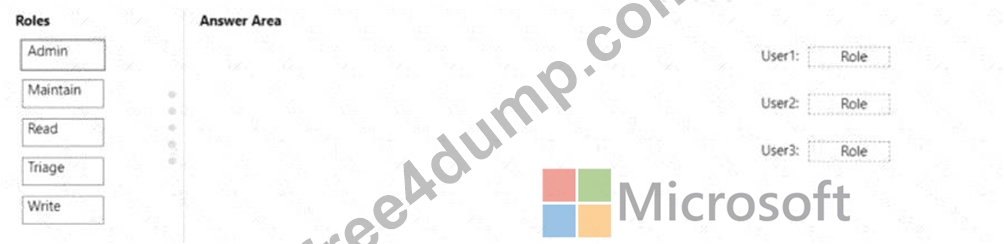
Answer:
Explanation: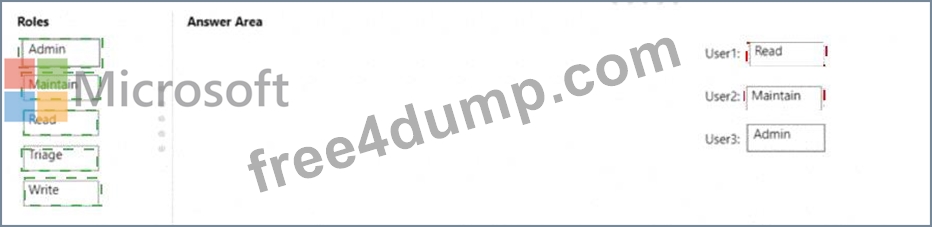
NEW QUESTION # 171
Note: This question is part of a series of questions that present the same scenario. Each question in the series contains a unique solution that might meet the stated goals. Some question sets might have more than one correct solution, while others might not have a correct solution.
After you answer a question in this section, you will NOT be able to return to it. As a result, these questions will not appear in the review screen.
Your company has a project in Azure DevOps for a new web application.
You need to ensure that when code is checked in, a build runs automatically.
Solution: From the Continuous deployment trigger settings of the release pipeline, you enable the Pull request trigger setting.
Does this meet the goal?
- A. No
- B. Yes
Answer: A
Explanation:
Instead, In Visual Designer you enable continuous integration (CI) by:
1. Select the Triggers tab.
2. Enable Continuous integration.
Reference:
https://docs.microsoft.com/en-us/azure/devops/pipelines/get-started-designer
NEW QUESTION # 172
You need to find and isolate shared code. The shared code will be maintained in a series of packages.
Which three actions should you perform in sequence? To answer, move the appropriate actions from the list of actions to the answer area and arrange them in the correct order.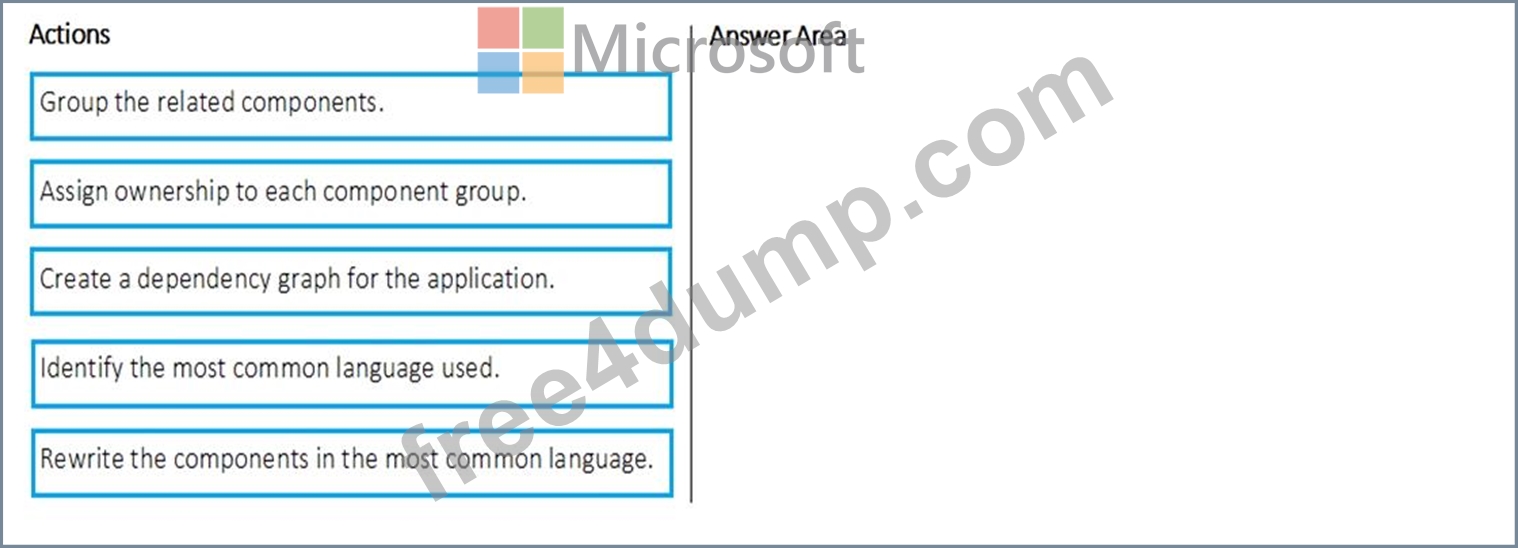
Answer:
Explanation: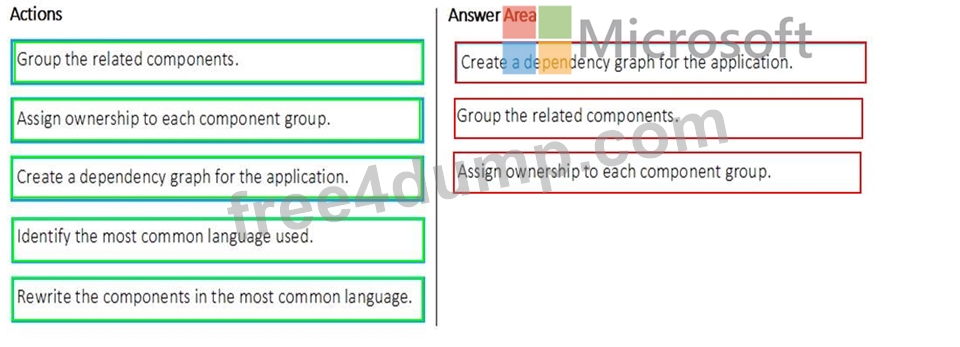
Reference:
https://docs.microsoft.com/en-us/azure/devops/boards/queries/link-work-items-support-traceability?view=azure-devops&tabs=new-web-form
https://docs.microsoft.com/en-us/visualstudio/releasenotes/tfs2017-relnotes
NEW QUESTION # 173
You need to recommend project metrics for dashboards in Azure DevOps.
Which chart widgets should you recommend for each metric? To answer, drag the appropriate chart widgets to the correct metrics. Each chart widget may be used once, more than once, or not at all. You may need to drag the split bar between panes or scroll to view content.
NOTE: Each correct selection is worth one point.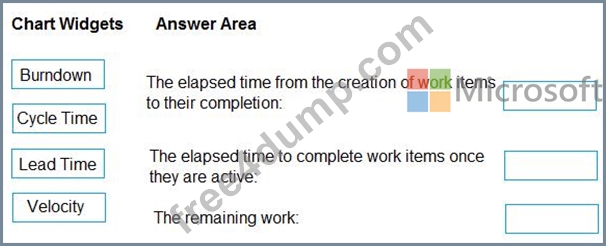
Answer:
Explanation: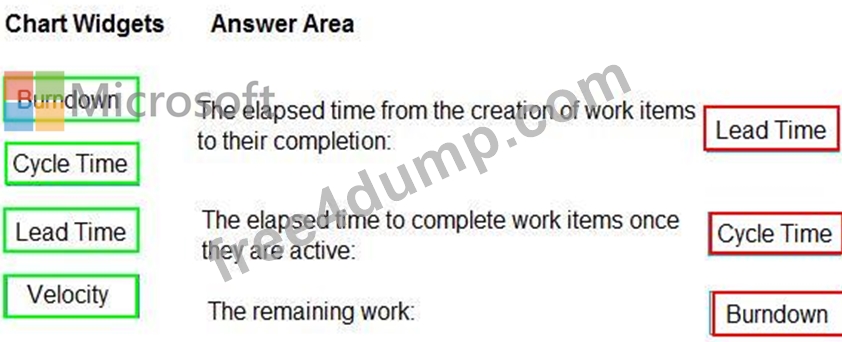
Reference:
https://docs.microsoft.com/en-us/azure/devops/report/dashboards/velocity-guidance?view=vsts
https://docs.microsoft.com/en-us/azure/devops/report/dashboards/cycle-time-and-lead-time?view=vsts
https://docs.microsoft.com/en-us/azure/devops/report/dashboards/configure-burndown-burnup-widgets?view=vsts
NEW QUESTION # 174
You have an Azure subscription that uses Azure Automation State Configuration to manage the configuration of virtual machines.
You need to identify which nodes are noncompliant.
How should you complete the query? To answer, drag the appropriate values to the correct targets. Each value may be used once, more than once, or not at all. You may need to drag the split bar between panes or scroll to view content.
NOTE: Each correct selection is worth one point.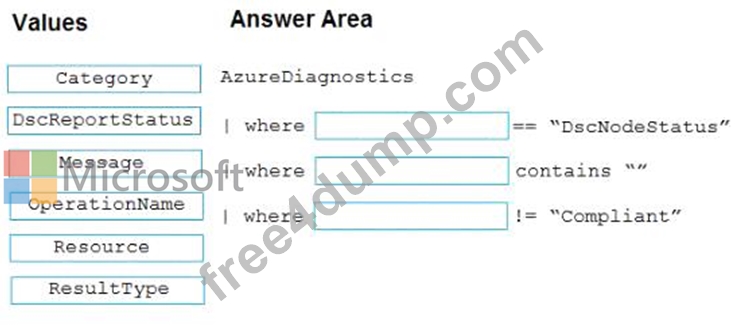
Answer:
Explanation: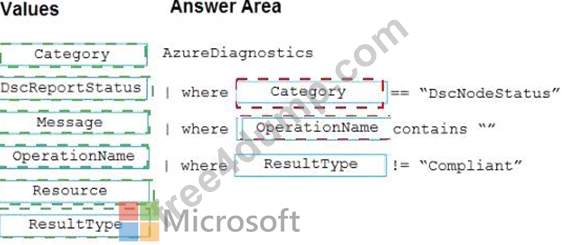
Explanation: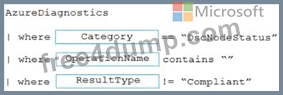
https://learn.microsoft.com/fr-fr/azure/automation/automation-dsc-diagnostics
NEW QUESTION # 175
You have a GitHub organization that contains three users named User 1. User2. and User3. You have a project that contains a repository named repo1. You need to configure permissions for repo1. The solution must meet the following requirements:
* Ensure that User 1 can actively push to repo1.
* Ensure that Usef2 can manage issues and pull requests for repo1.
* Ensure that User3 can manage repo1.
* Prevent User3 from accessing sensitive data in repo1.
Which role should you assign to each use?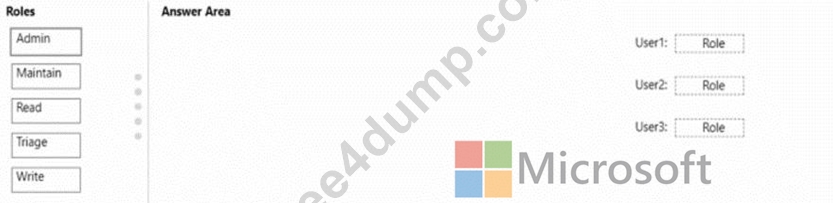
Answer:
Explanation: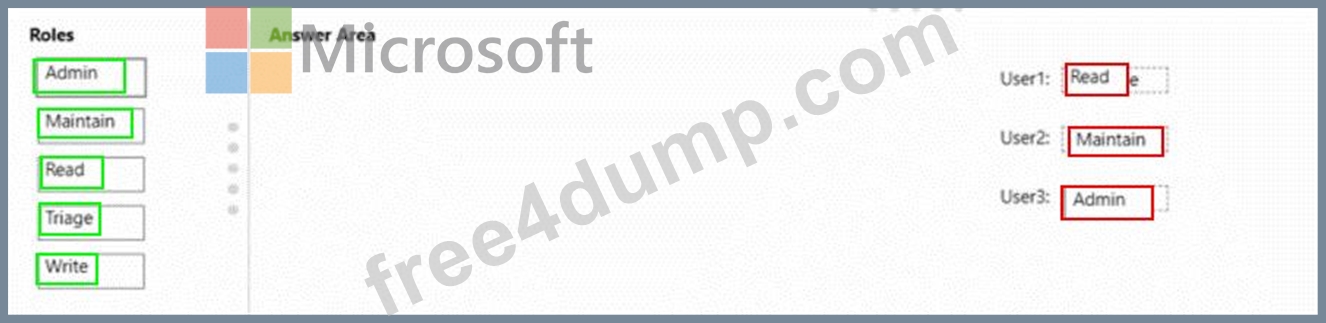
NEW QUESTION # 176
You use Get for source control.
You need to optimize the performance of a repository. The solution must meet the following requirements:
* Permanently remove all items referenced only in the ref log.
* Remove history that is NOT in any current branch.
How should you complete the command? To answer, select the appropriate options in the answer area.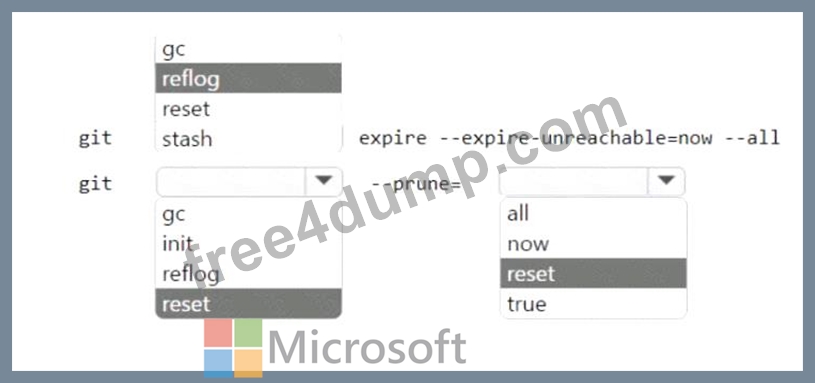
Answer:
Explanation: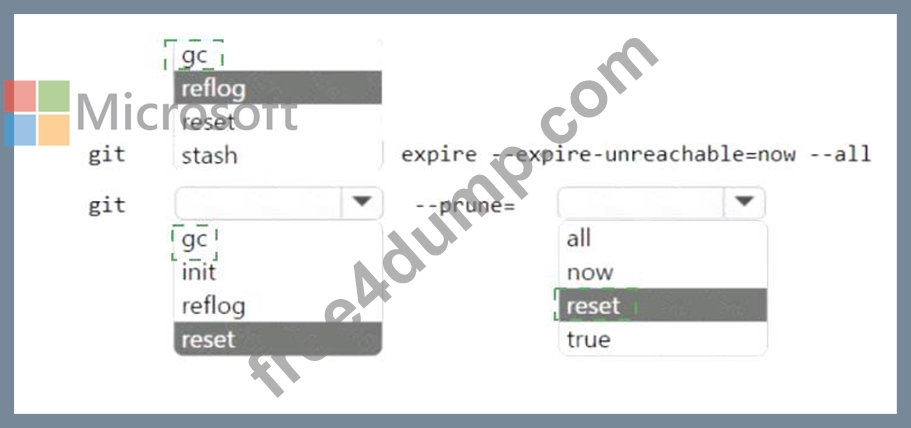
Explanation
NEW QUESTION # 177
You need to configure authentication for App1. The solution must support the planned changes.
Which three actions should you perform in sequence? To answer, move all actions from the list of actions to the answer area and arrange them in the correct order.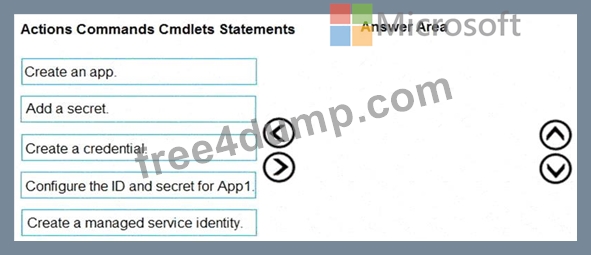
Answer:
Explanation: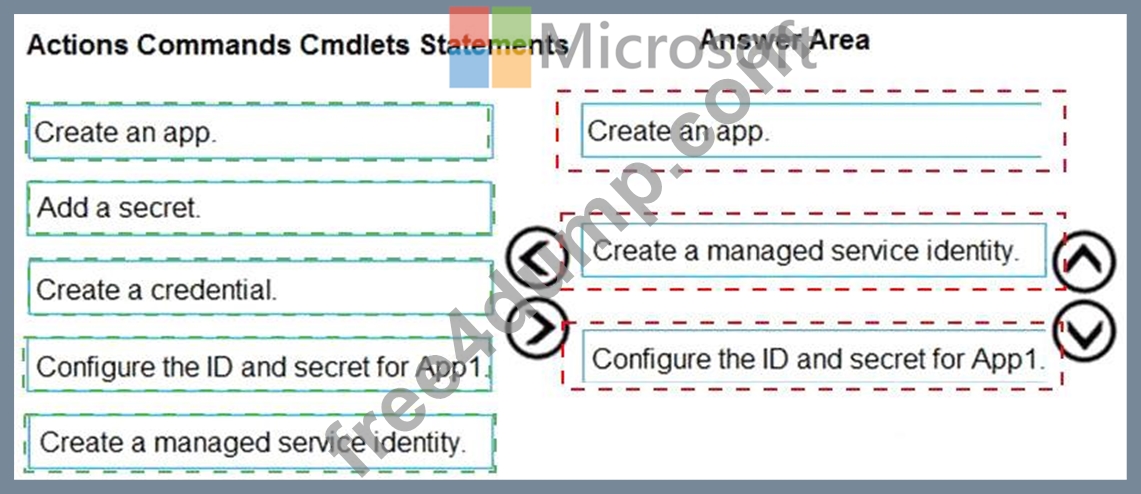
Explanation: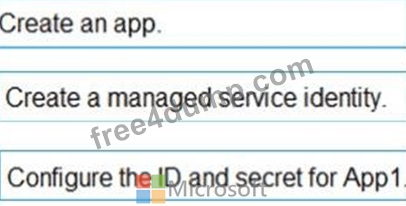
Woodgrove Bank plans to implement the following changes to the identity environment:
Configure App1 to use a service principal.
Reference:
https://docs.microsoft.com/en-us/azure/active-directory/develop/howto-create-service-principal-portal
NEW QUESTION # 178
Your company has two virtual machines that run Linux in a third-party public cloud.
You plan to use the company's Azure Automation State Configuration implementation to manage the two virtual machines and detect configuration drift.
You need to onboard the Linux virtual machines.
You install PowerShell Desired State Configuration (DSC) on the virtual machines, and then run register.py.
Which three actions should you perform next in sequence? To answer, move the actions from the list of actions to the answer area and arrange them in the correct order.
Answer:
Explanation:
Explanation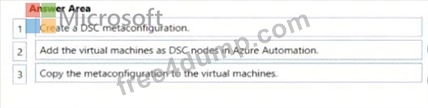
NEW QUESTION # 179
You have a project in Azure DevOps that includes two users named User1 and User2.
You plan to use Azure Monitor to manage logs.
You need to ensure that the users can perform the actions shown in following the table.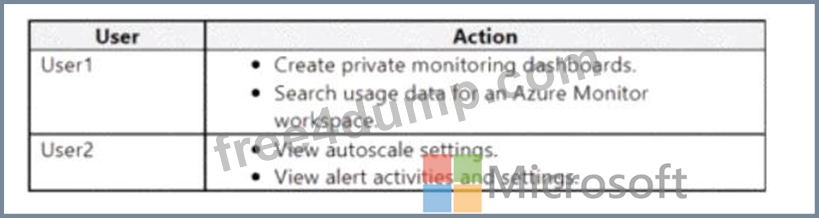
The solution must follow the principle of least privilege.
Which role should you assign to each user? To answer select the appropriate options in the answer area.
NOTE: Each correct selection is worth one point.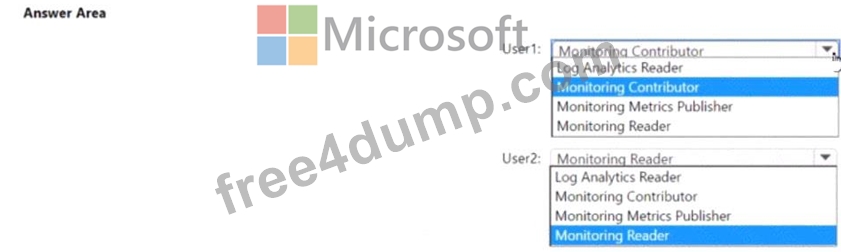
Answer:
Explanation: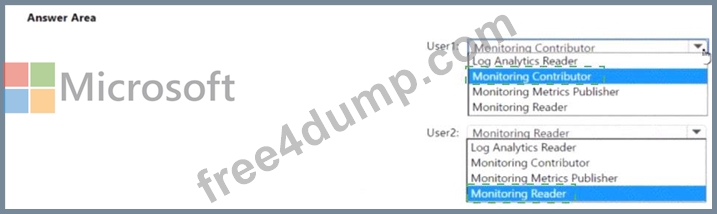
Explanation:
NEW QUESTION # 180
You need to configure access to Azure DevOps agent pools to meet the following requirements:
Use a project agent pool when authoring build or release pipelines.
View the agent pool and agents of the organization.
Use the principle of least privilege.
Which role memberships are required for the Azure DevOps organization and the project? To answer, drag the appropriate role memberships to the correct targets. Each role membership may be used once, more than once, or not at all. You may need to drag the split bar between panes or scroll to view content.
NOTE: Each correct selection is worth one point.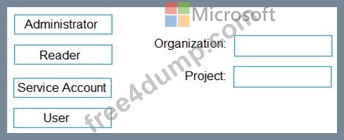
Answer:
Explanation: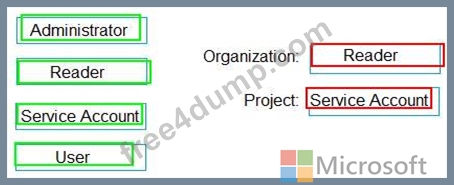
Reference:
https://docs.microsoft.com/en-us/azure/devops/pipelines/agents/pools-queues
NEW QUESTION # 181
......
Correct and Up-to-date Microsoft AZ-400 BrainDumps: https://www.free4dump.com/AZ-400-braindumps-torrent.html
Current AZ-400 dumps Preparation through Our Practice Test: https://drive.google.com/open?id=1uve73eqEPaVkw-4iQoxEBxp2fp2lpZZ4